


Swisse
MID Since 1969
One of the most globally recognised Australian brands, dominating the market with comprehensive multivitamins and targeted wellness blends.
Available in TH
Search “probiotic” ↗
Supplement Comparison
All probiotic supplements are not the same. Four families exist (Lactobacillus, Bifidobacterium, Saccharomyces yeast, spore-based Bacillus), strain identity matters far more than CFU count, and the price-per-effective-dose can swing 10×. This page ranks 8 popular products by what the evidence actually supports — and what you're paying for.
Last updated: August 23, 2026 · Sources: Cochrane S. boulardii review 2017, NIH ODS Probiotic fact sheet, Examine.com Probiotic research digest
Best all-rounder
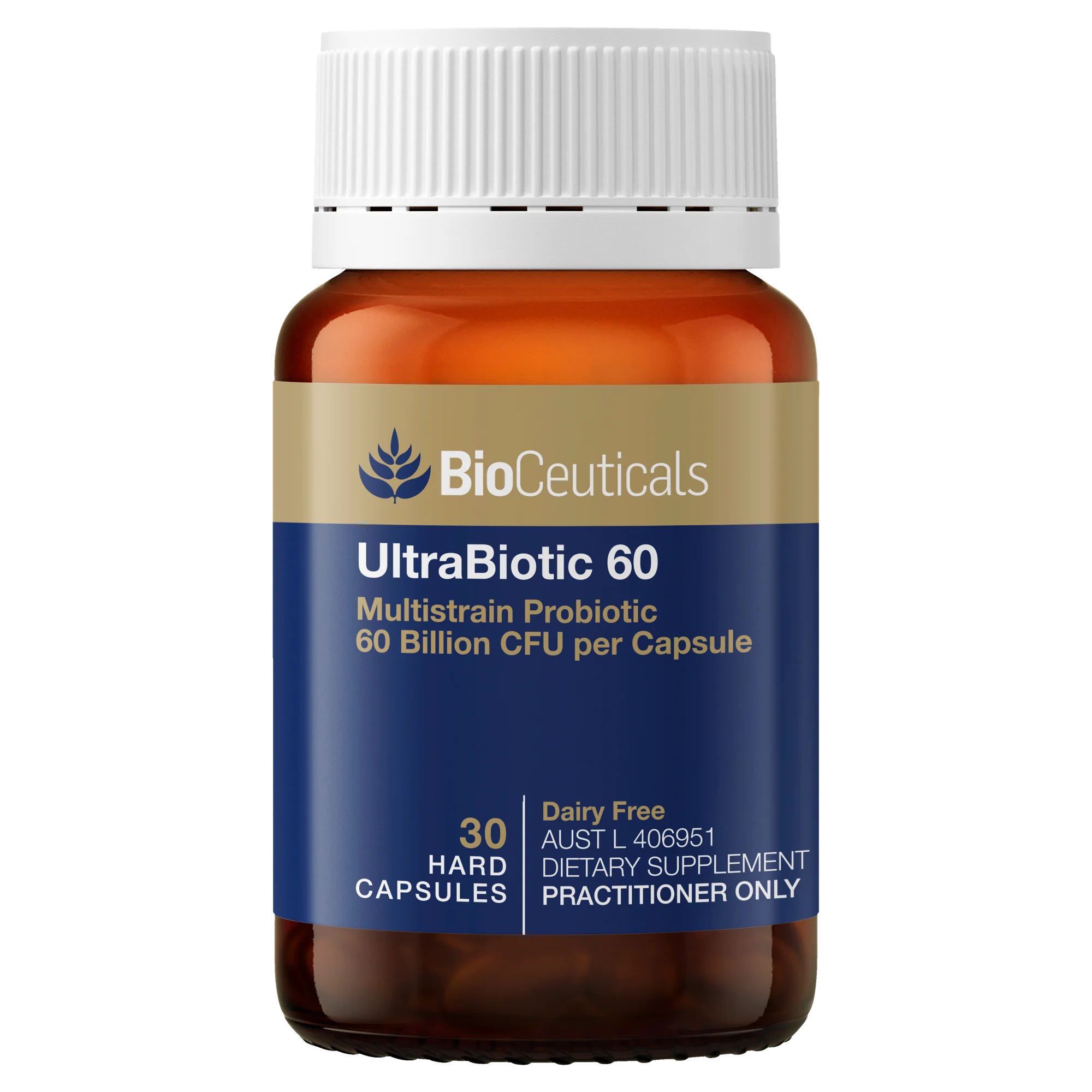
BioCeuticals UltraBiotic 60
10-strain Lab4 consortium, 60B CFU. Strongest multi-strain evidence in this list. Practitioner-grade.
Best for antibiotics
Florastor (S. boulardii)
Yeast — survives antibiotics. Cochrane-grade evidence for AAD prevention (RR 0.47).
Best budget
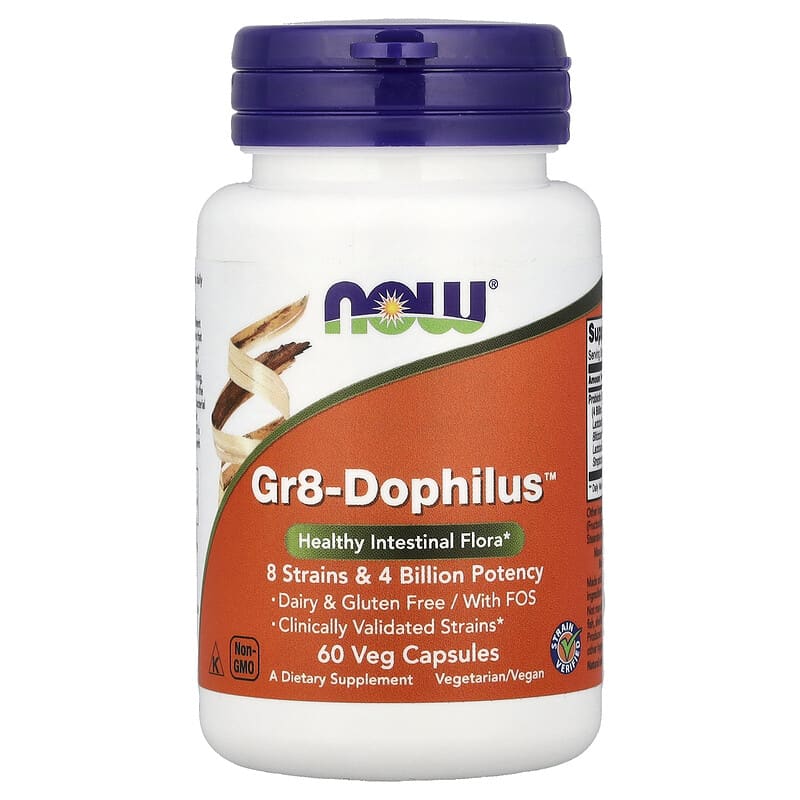
NOW Foods Gr8-Dophilus
8 strains, 4B CFU, ~$10/month. Generic but cheap and shelf-stable.
Compare 8 popular probiotic products — 6 multi-strain blends, 1 Saccharomyces boulardii, 1 spore-based — on evidence strength, strain count, CFU per serving, and refrigeration requirements. Prices are per-month at the label-recommended daily dose.
| Brand / Product | Form | Strains | CFU/serving | Refrig? | Evidence | Monthly $ | TH |
|---|---|---|---|---|---|---|---|
| Multi-strain L+B | 3 | 35B | No | 3/5 | $14.92 ↗ 2026-07-20 · iHerb | ✓ | |
| Multi-strain L+B | 5 | 30B | No | 3/5 | $64.28 ↗ 2026-07-20 · iHerb | ✓ | |
| Multi-strain L+B | 10 | 60B | Yes | 4/5 | $40.18 ↗ 2026-07-20 · iHerb | — | |
| Multi-strain L+B | 12 | 60B | No | 2/5 | $22.80 ↗ 2026-07-20 · iHerb | — | |
| Saccharomyces boulardii | 1 | 5B | No | 5/5 | — | ✓ | |
| Multi-strain L+B | 8 | 112B | Yes | 4/5 | $57.67 ↗ 2026-07-20 · iHerb | — | |
| Spore-based (Bacillus) | 1 | 2B | No | 3/5 | — | — | |
| Multi-strain L+B | 8 | 4B | No | 2/5 | $10.44 ↗ 2026-07-20 · iHerb | ✓ |
Swisse — Ultibiotic Daily Digestive Probiotic 90 caps
iHerb AU$68.84/90 caps = USD ~$44.75, ÷ 90 days at 1 cap/day = $14.92/mo. HOWARU HN019 + La-14 + BI-04 strains; well-documented.
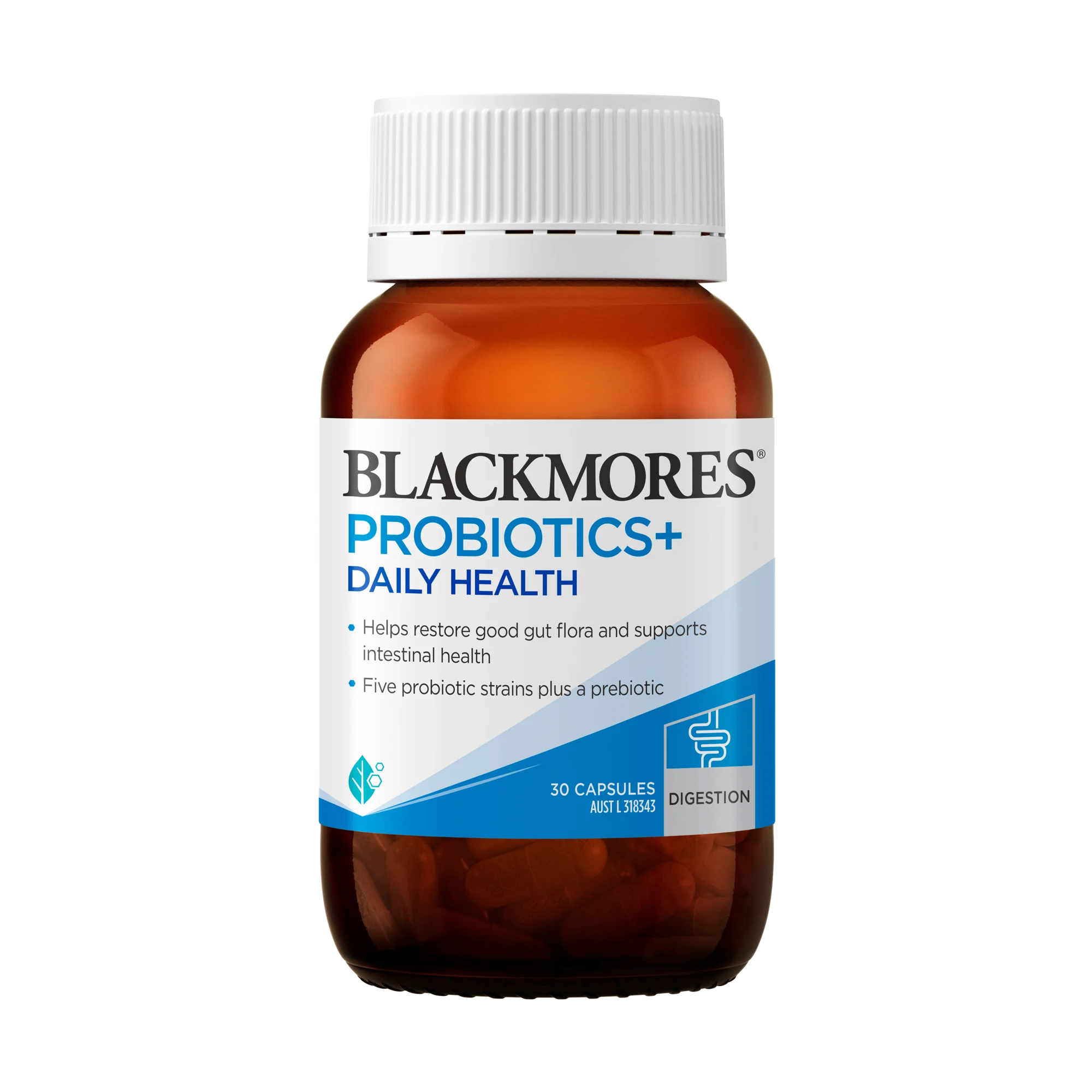
Blackmores — Probiotics+ Daily Health 30 caps
iHerb AU$98.89/30 caps = USD ~$64.28/mo. Inulin prebiotic included. Mid-range for AU pharmacy probiotic.
BioCeuticals — UltraBiotic 60 (Lab4) 60 caps
iHerb AU$123.63/60 caps = USD ~$80.36, ÷ 60 days = $40.18/mo. Practitioner-only (AU). Lab4 consortium has published RCT data.
Herbs of Gold — Probiotic 60 Billion 60 caps
iHerb AU$70.16/60 caps = USD ~$45.60, ÷ 60 days = $22.80/mo. Broad-spectrum but no strain-specific RCT data.
Florastor — Florastor Saccharomyces boulardii CNCM I-745
Gold-standard yeast probiotic for antibiotic-associated diarrhoea (Cochrane 2017). 5B CFU/cap, 2 caps/day on label = ~250 mg Saccharomyces boulardii lyo. iHerb AU bottle price not extractable for current SKU; brand site sells via local pharmacy networks. TH: stocked at major pharmacies (Watsons/Boots).
Visbiome — Visbiome GI Care (De Simone Formulation) 30 caps
iHerb AU$88.73/30 caps = USD ~$57.67/mo. Medical-grade high-CFU (112.5B/cap) with cold-chain shipping. Used in UC/pouchitis trials (De Simone formulation, 100+ clinical studies).
Thorne — Bacillus Coagulans SF758 60 caps
Shelf-stable spore-based probiotic. Thorne PDP uses Nuxt SSR; CFU/cap not extractable from server-rendered HTML in audit. 2B CFU is historical spec from older iHerb listing (NOT verified on Thorne PDP 2026-07-20). Premium practitioner-grade brand.
NOW Foods — Gr8-Dophilus 60 veg caps
iHerb AU$32.13/60 caps = USD ~$20.88, ÷ 60 days = $10.44/mo. Budget multi-strain, room-stable, popular worldwide. nowfoods.com Cloudflare-blocked from headless 2026-07-20; image + price verified via iHerb.
Lactobacillus blends
Bifidobacterium blends
Saccharomyces boulardii
Spore-based (Bacillus)
Daily maintenance. 1 capsule per day with a meal or 30 minutes before, most days of the week. Strain identity matters more than CFU count — 5 billion CFU of LGG outperforms 50 billion CFU of unnamed strains.
During antibiotics. Take Saccharomyces boulardii (Florastor or generic) starting on day 1 of the antibiotic course, 2 capsules daily spaced 2+ hours from the antibiotic dose. Continue for at least 7 days after the antibiotic ends. For Lactobacillus strains, wait until the antibiotic course is finished — most lactobacillus strains get killed by the antibiotic.
Refrigeration. Most modern probiotics are shelf-stable for 18–24 months at room temperature. If the label doesn't say "Keep refrigerated," you don't need to. Genuinely cold-chain products (Visbiome) ship in cold packs and should be refrigerated on arrival.
Course length. For specific conditions (post-antibiotic, traveller's diarrhoea), 2–4 weeks is typical. For general maintenance, indefinite daily use is safe based on available evidence. There's no documented harm from long-term use of well-characterised strains.
Empty stomach vs with food. Most modern strains are acid-resistant and don't require empty-stomach dosing. Take with food if you notice any GI discomfort.
Best all-rounder
BioCeuticals UltraBiotic 60
~$40/mo. 10-strain Lab4 consortium, 60B CFU, published RCT data. Requires refrigeration. Practitioner-grade; AU availability via prescription or pharmacy.
Best for antibiotics
Florastor S. boulardii
Cochrane-grade evidence for AAD prevention. Survives antibiotics. Shelf-stable. Available at Watsons and Boots in Thailand. Premium price reflects 2-caps/day dose.
Best budget
NOW Foods Gr8-Dophilus
~$10/mo. 8 strains, 4B CFU, room-stable, ships worldwide. Generic — strain identity not as well-documented as BioCeuticals or Florastor.
Generally safe. Probiotics have an excellent safety record across all age groups in healthy adults. Most adverse events are mild (transient bloating or gas in the first 1–2 weeks of use). NIH ODS rates the overall safety as "very good" for healthy populations.
Immunocompromised patients. Rare cases of bacteremia or fungemia have been reported in severely immunocompromised patients (post-chemotherapy, central venous catheter, short-bowel syndrome). Saccharomyces boulardii has a specific warning for catheter patients because the yeast can colonise the catheter surface. If you fall in this group, consult your physician before starting any probiotic.
SBO / IBS severe cases. People with small-intestinal bacterial overgrowth (SBO) often feel worse on probiotics — extra bacteria in the wrong place can amplify bloating. If symptoms worsen after starting, stop.
Pregnancy and children. Lactobacillus and Bifidobacterium strains have been studied in pregnancy and infancy with reassuring safety data. Saccharomyces boulardii is generally considered safe but has less data in pregnancy. Always check with your OB-GYN or paediatrician.
Drug interactions. Probiotics can interfere with immunosuppressants. S. boulardii and antifungal medications are a specific interaction (the antifungal will kill the yeast probiotic, defeating the purpose).
These 10 brands are featured on every vitfacts.com comparison page. We track them for ingredient transparency, third-party testing, and Thailand availability.
Since 1969
One of the most globally recognised Australian brands, dominating the market with comprehensive multivitamins and targeted wellness blends.
Since 1932
A heritage naturopathic brand spanning over 90 years, known for rigorous ingredient sourcing and massive pharmacy presence throughout the Asia-Pacific region.
Since 1993
A premium, practitioner-only brand (owned by Blackmores) offering highly concentrated, clinical-strength formulas that are frequently recommended by healthcare professionals.
Since 1986
A high-quality pharmacy brand heavily focused on evidence-based ingredients, widely known for its "Inner Health" probiotic range and highly absorbable magnesium powders.
Since 1980s
Born in Australia, this brand formulates therapeutic herbal and nutritional supplements with a strict focus on purity, offering many vegan-friendly options.
Since 1970s
One of Australia's longest-running and most accessible vitamin brands, providing a massive, budget-friendly range found in most major supermarkets and pharmacies.
Since 1984
While based in the US, Thorne is heavily imported and highly sought after by functional medicine practitioners globally—including in both Australia and Thailand. It is considered a gold standard due to its strict four-round testing protocol and complete absence of unnecessary fillers or binders.
Since 2006
An Australian-made value brand founded in 2006, sold through Chemist Warehouse and major AU pharmacies. Part of the Nature's Care family (est. 1990), offering a wide mass-market supplement range covering fish oil, vitamins C/D, magnesium, probiotics, zinc, iron, ashwagandha, collagen, and CoQ10.
Why these 10? See the VitFacts editorial policy page (forthcoming) for the criteria — minimum 10 years of documented safety record, public certificate-of-analysis policy, and verifiable Thailand distribution.