One in five people in Australia are clinically deficient. Many of the same people are taking the wrong form. This page ranks 11 popular vitamin D products by molecule (D3 vs D2 vs calcifediol), origin (lanolin vs vegan lichen), and price per 1000 IU.
Last updated: August 23, 2026 · Sources: NIH ODS, Endocrine Society 2011 (Holick), Tripkovic 2012 meta-analysis
At a glance
Best absorption
Calcifediol (25(OH)D)
Pre-hydroxylated form. 3× more potent per mcg than cholecalciferol. Useful for liver issues, obesity, severe deficiency.
Best budget
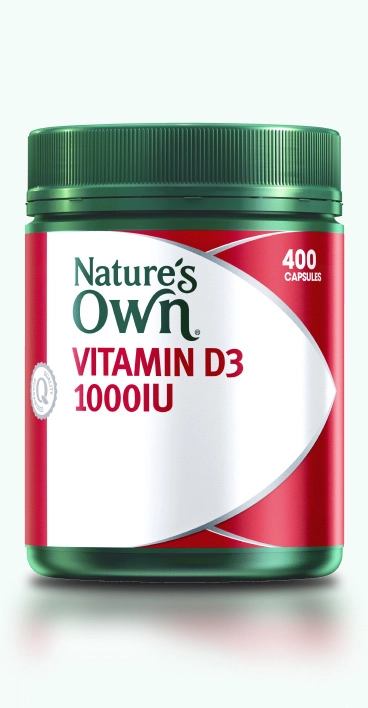
Nature's Own D3 1000 (200 caps)
AUD $9.99 / 200 caps = AUD $0.05 per 1000 IU. Cheapest per-IU on the AU pharmacy shelf.
Best vegan
Herbs of Gold D3 Liquid
D3 from lichen (NOT lanolin). Pineapple flavour, 200 drops per bottle. The only truly vegan D3 in our 10-brand directory.
Product comparison
Compare 11 popular vitamin D products on form, dose per capsule, bioavailability score, vegan status, and Thailand availability. Prices are per bottle; per-1000-IU cost follows the math at the top of each card.
Bioavailability 1/5 = weakest absorption, 5/5 = strongest. Vistra (TH) and Interpharma (TH) confirmed NOT to make standalone Vitamin D SKUs as of 2026 — see the brand matrix for details.
The 4 forms of vitamin D explained
1
D3 (cholecalciferol) — the workhorse
Bioavailability: 3/5
The form your skin makes from sunlight. Comes from lanolin (sheep wool) in most supplements. Requires liver + kidney hydroxylation to become active calcitriol. The Tripkovic 2012 meta-analysis settled the long-running D2 vs D3 debate: D3 raises serum 25(OH)D significantly more than D2.
Best for: the vast majority of people. Cheap, well-studied, sufficient for anyone without liver or kidney disease.
2
D2 (ergocalciferol)
Bioavailability: 1/5
The plant and fungal form (UV-exposed mushrooms). Once considered interchangeable with D3, now considered second-line: Tripkovic 2012 (BMJ) showed D2 raises 25(OH)D less efficiently than D3, and may even trigger faster breakdown of the body's own D stores. Preserved in this comparison only because some prescription supplements still use it.
Best for: situations where D3 is contraindicated (rare). Most people should avoid.
3
Calcifediol (25(OH)D) Best absorption
Bioavailability: 4/5
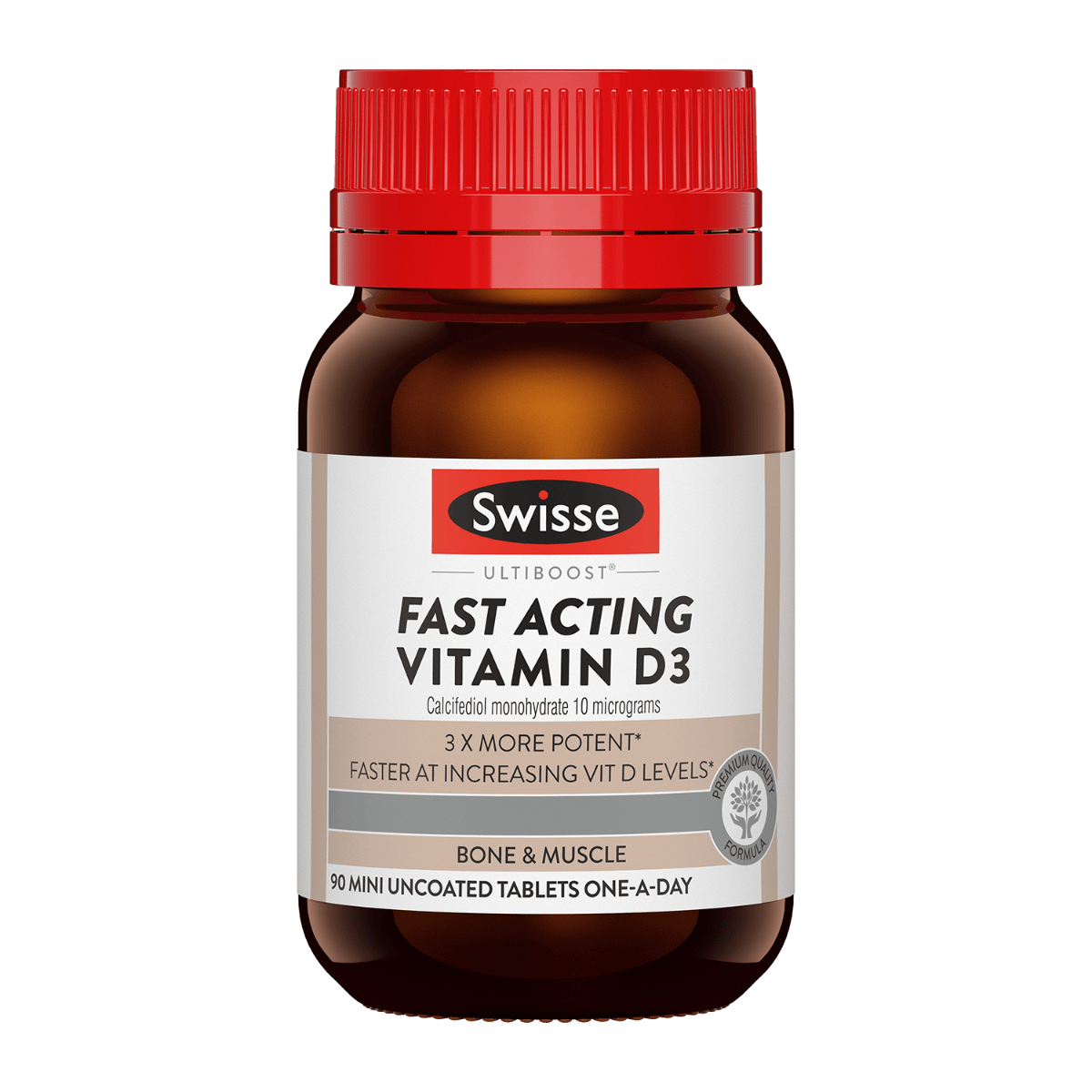
Already hydroxylated once — what the liver produces from D3 before the kidney activates it. 3× more potent per microgram than cholecalciferol. Endorsed by the Endocrine Society 2011 guideline (Holick) as preferred for people with liver disease, obesity (vitamin D gets trapped in fat tissue), or severe deficiency. Now widely available OTC in Australia as Swisse Ultiboost Fast-Acting.
Best for: liver conditions, BMI >30, severe deficiency (25(OH)D < 30 nmol/L), people whose D3 blood tests aren't responding despite months of supplementation.
4
D3 from vegan sources (lichen)
Bioavailability: 3/5 (with caveat)
Vegans and strict vegetarians cannot take the standard lanolin-derived D3. A few brands now extract cholecalciferol from UV-exposed lichen (a slow-growing northern-hemisphere algae-fungus symbiosis). The molecule is identical to animal-sourced D3 and absorbs the same way per NIH ODS, but supply is limited. Expect to pay 1.5–2× per IU for the privilege of being vegan.
Best for: vegans, vegetarians, anyone who avoids animal-derived ingredients for religious reasons (some halal-conscious users).
How much vitamin D do you actually need?
Per the US Institute of Medicine (IOM 2011) and the Australian NHMRC. Deficiency (<50 nmol/L 25(OH)D) is common at higher latitudes.
Group
RDA / AI (IU/day)
UL (IU/day)
Infants 0–12 months
400
1,000
Children 1–8 years
600
2,500
Children 9–18 years
600
4,000
Adults 19–70 years
600
4,000
Adults >70 years
800
4,000
Pregnancy / lactation
600
4,000
Source: NIH Office of Dietary Supplements (ods.od.nih.gov/factsheets/VitaminD-HealthProfessional/) · UL = tolerable upper intake level · Many clinicians prescribe 1000–2000 IU/day for maintenance in deficient adults, well below the 4000 IU UL.
Top picks by use case
Best budget
Nature's Own D3 1000 (200 caps)
AUD $9.99 / 200 caps at Chemist Warehouse — cheapest per 1000 IU in the AU pharmacy channel. Plain cholecalciferol, no frills.
Best absorption
Swisse Ultiboost Fast-Acting Vitamin D3
Calcifediol (25(OH)D) — already hydroxylated, 3× more potent per mcg. The right choice for liver issues, obesity, or stubborn deficiency.
Best vegan
Herbs of Gold D3 1000 Liquid
Vegan D3 from lichen. Pineapple flavour, 200 drops per bottle. The only truly vegan option in our 10-brand directory.
Best Thailand-available
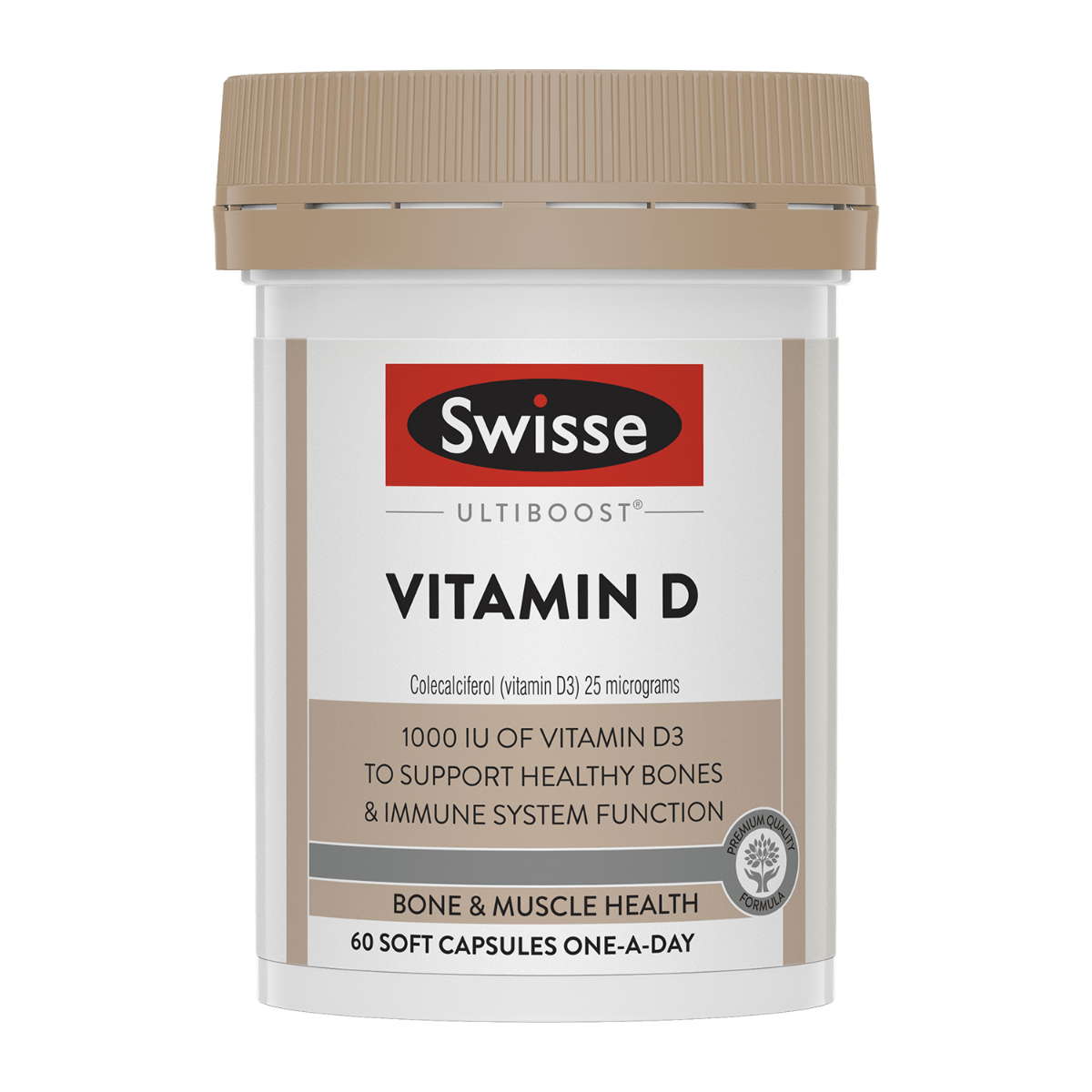
Swisse Ultiboost Vitamin D 1000
Available at Watsons, Boots, and independent Thai pharmacies. Plain cholecalciferol — works fine for tropical doses.
Best practitioner-grade
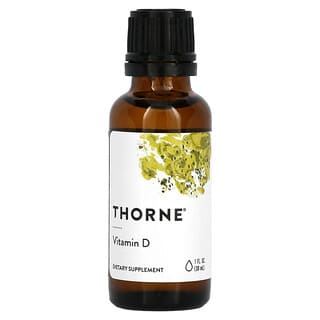
Thorne D-1000
NSF Certified for Sport. Four rounds of third-party testing. Recommended by functional medicine practitioners. Available on iHerb.
Best for high-dose corrective
Ethical Nutrients Daily D (270 caps)
Large size-270 tub for long-term maintenance after a clinically diagnosed deficiency. AUD $40.99 at Chemist Warehouse.
Toxicity & drug interactions
Vitamin D toxicity (hypervitaminosis D) is rare but real. Hypercalcemia can damage kidneys and heart. The 4000 IU/day UL is conservative; clinicians prescribe higher for severe deficiency but require blood tests every 3 months.
Warning signs of excess
Nausea / vomiting / constipation
Excessive thirst, frequent urination
Confusion / lethargy
Kidney stones in predisposed individuals
High blood calcium on lab tests (>10.5 mg/dL)
Drug interactions
Thiazide diuretics — raise serum calcium, risk with high-dose D
Corticosteroids (prednisone) — interfere with D activation, may need higher dose
Weight-loss drugs (orlistat) — block fat-soluble D absorption
Cholesterol-lowering statins — atorvastatin/lovastatin + high D can raise calcium
Anticonvulsants (phenytoin, phenobarbital) — accelerate D breakdown
Holick MF, et al. (2011). Evaluation, treatment, and prevention of vitamin D deficiency: an Endocrine Society clinical practice guideline. Journal of Clinical Endocrinology & Metabolism 96(7):1911-1930. PMID: 21646368
Tripkovic L, et al. (2012). Comparison of vitamin D2 and vitamin D3 supplementation: a systematic review and meta-analysis. BMJ 344:e5702. PMID: 22071892
Vieth R (1999). Vitamin D supplementation, 25-hydroxyvitamin D concentrations, and safety. Journal of the American College of Nutrition 18(5):463-472. PMID: 10539756
Bischoff-Ferrari HA, et al. (2005). Fracture prevention with vitamin D supplementation: a meta-analysis of randomized controlled trials. JAMA 293(18):2257-2264. PMID: 15687326
Chemist Warehouse Australia, Swisse AU, Blackmores AU, BioCeuticals AU, Ethical Nutrients, Herbs of Gold, Nature's Own, Mega We Care, Thorne, iHerb — product pages and price snapshots cited per row above (date column).
Trusted brands we rate
These 10 brands are featured on every vitfacts.com comparison page. We track them
for ingredient transparency, third-party testing, and Thailand availability.
A heritage naturopathic brand spanning over 90 years, known for rigorous ingredient sourcing and massive pharmacy presence throughout the Asia-Pacific region.
A premium, practitioner-only brand (owned by Blackmores) offering highly concentrated, clinical-strength formulas that are frequently recommended by healthcare professionals.
A high-quality pharmacy brand heavily focused on evidence-based ingredients, widely known for its "Inner Health" probiotic range and highly absorbable magnesium powders.
Born in Australia, this brand formulates therapeutic herbal and nutritional supplements with a strict focus on purity, offering many vegan-friendly options.
One of Australia's longest-running and most accessible vitamin brands, providing a massive, budget-friendly range found in most major supermarkets and pharmacies.
A leading pharmaceutical-grade supplement brand in Southeast Asia, widely trusted by Thai consumers for its fish oil and targeted clinical nutrition products.
While based in the US, Thorne is heavily imported and highly sought after by functional medicine practitioners globally—including in both Australia and Thailand. It is considered a gold standard due to its strict four-round testing protocol and complete absence of unnecessary fillers or binders.
An Australian-made value brand founded in 2006, sold through Chemist Warehouse and major AU pharmacies. Part of the Nature's Care family (est. 1990), offering a wide mass-market supplement range covering fish oil, vitamins C/D, magnesium, probiotics, zinc, iron, ashwagandha, collagen, and CoQ10.
Why these 10? See the VitFacts editorial policy page (forthcoming) for the criteria — minimum
10 years of documented safety record, public certificate-of-analysis policy, and verifiable
Thailand distribution.